

The Managed Backbone: Why Your Property Needs More Than Just a Point of Entry
Internet access is only the beginning. The strength of your infrastructure management depends on how the building is designed, wired, and managed after the point of entry.

Bryan Tuttle
Senior Account Executive
Business Internet

Infrastructure management inside most buildings suffers from a quiet but costly misconception: if fiber is in the building, the job is done. But fiber is only the point of entry, not the system itself. Just like electrical, plumbing, or HVAC, your property’s communications backbone must be intentionally designed, wired, and actively managed to perform at scale.
Without thoughtful network infrastructure management beyond the point of entry, buildings are left with tangled cabling, fragmented systems, and growing performance risks. Poorly organized infrastructure creates a mess that blocks airflow into server racks, generates heat pockets, and forces HVAC systems to work harder, driving up your building’s energy costs while shortening your equipment life.
As the demand for better connectivity grows across industries, poor communications infrastructure is becoming difficult for property managers to ignore. Even as fiber-to-the-building adoption grows, the real difference is what happens after your internet is installed.
Structured cabling – which is expected to help drive a global market exceeding $20B by 2030 – provides the strong foundation that allows modern buildings to support AI, automation, and operational efficiency at scale. Without proactive infrastructure managed services, properties risk tenant dissatisfaction, operational bottlenecks, and expensive retrofits.
What is a “Point of Entry?”
The point of entry (POE), often called the demarcation point or “demarc,” is where a building’s internet service officially begins and, just as importantly, where your provider’s responsibility ends.
The demarc is the handoff between the outside network and everything that happens inside the property. In computing, a point of entry is any access point where a system or network interaction starts, acting as a controlled gateway between users and technology.
In a building, the demarc serves a similar purpose: it’s the boundary where the communications provider’s external wiring connects to the building’s internal infrastructure, shifting ownership and accountability from the carrier to the property owner or tenant. This difference matters because most IT providers deliver service to the building, not throughout it. Without intentional infrastructure management past the point of entry, your building is left with a chaotic network that struggles to scale, perform, or adapt to tenant needs.
Your Communications Backbone is an Overlooked Asset
Developers and property managers who want to move beyond basic fiber connectivity should treat their communications backbone like a necessary utility. Just like plumbing, electrical, or HVAC, your core building system needs intentional design, maintenance, and professional infrastructure management.
The foundation of a well-managed backbone is fiber internet, which delivers the high speeds and capacity your tenants demand. Fiber operates at gig speeds, often 10 to 20 times faster than the copper connections many older properties still offer. This difference is significant, meaning your commercial tenants can work faster, surf with confidence, and stream at peak hours without interruptions.
Fast internet alone isn’t enough, however. Structured cabling provides a standardized, organized method for interconnecting building systems, including data, voice, security, access control, heating and water. With a well-managed system, your building systems operate in tandem instead of competing for space and bandwidth. When combined with professional riser management, clearly defined network rooms, and protected pathways, your backbone becomes easier to maintain, troubleshoot, and scale.
Why Infrastructure Management Should Matter to Property Managers
For property managers , infrastructure management is no longer an IT issue, it’s a core operational and financial strategy. Modern network infrastructure management is proactive by design, continuously monitoring systems, applying updates, and addressing issues before they disrupt tenants or building operations.
Professionally managed riser management focuses on preventing downtime through automation, securing hybrid environments, and providing 24/7 monitoring with strategic guidance. This approach improves tenant experiences and ultimately, retention. Slow or unreliable connectivity quickly becomes a leasing issue, especially as tenants rely on cloud platforms, video conferencing, and smart building technologies.
From an asset perspective, the upside is just as clear. Buildings with modern, managed infrastructure lease faster, support higher rents, and maintain stronger long-term valuations. For management professionals and building owners, professionally managed communications infrastructure signals lower operational risk and positions your properties as “future-ready” in competitive markets.
Lastly, proactive infrastructure management services help you avoid expensive retrofits in the future. Retrofitting fiber in existing buildings is often disruptive, expensive, and limited by outdated infrastructure, which means specialized labor, permits, and additional cost. Designing smart infrastructure early is simply more efficient and cost-effective than fixing it when tenant retention becomes an issue.
Managed Infrastructure Services vs DIY Management
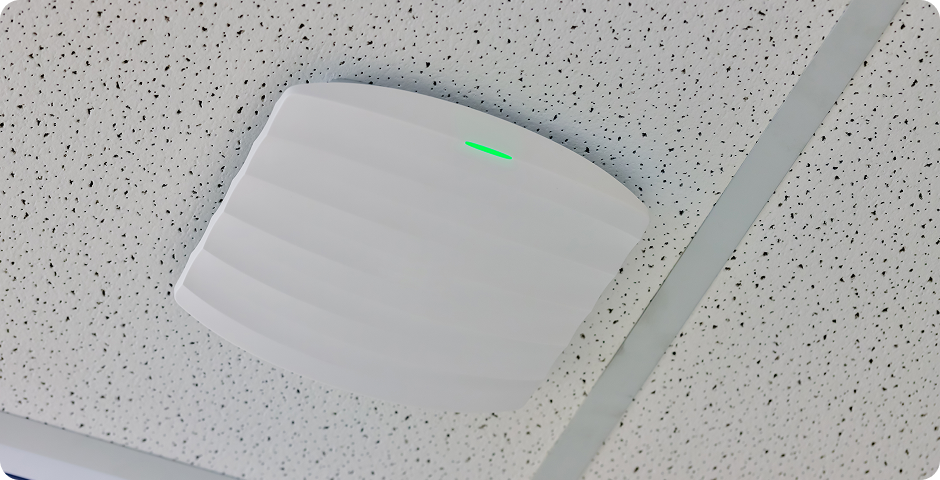
The difference between ad hoc connectivity and professional managed infrastructure services comes down to scope, ownership, and accountability. Point-of-entry-only providers focus on powering individual endpoints, like cameras or WiFi access points, but they don’t manage the health or design of the broader network backbone.
One-off tenant installs, which is common in multi-tenant properties, push the responsibility to each occupant, resulting in fragmented networks, redundant cabling, and growing management complexity over time. By contrast, fully managed communications infrastructure is an end-to-end model where a third party designs, operates, secures, and maintains the entire communications backbone, delivering enterprise-grade reliability and scalability across the property.
Poor cable management alone is a major contributor to unplanned downtime. Loose or overlapping cables can easily come loose during routine maintenance, stressed connections can fail, and dense cable bundles create fire risks. Even a single hour of downtime can cost organizations anywhere from $100,000 to over $540,000 in lost productivity and revenue.
What an Effectively Managed Communications Backbone Looks Like
An effectively managed communications backbone isn’t just well-organized cabling – it’s a secure, proactive, and scalable foundation that aligns technology with the long-term goals of the property.
Instead of reacting to outages or tenant complaints, a strong backbone is continuously monitored by robust cybersecurity, and supported by automated processes that reduce the likelihood of outages. This approach ensures high availability today while allowing the building to grow and adapt without disruption.
A well-managed communications backbone strategy should include:
- Proactive security and monitoring – this should include 24/7 visibility into your network performance.
- A single source of truth – a good backbone has a single portal for network data, and clearly documented processes for network management and outage response.
- Scalability – your backbone should easily support new tenants and higher bandwidth demands without performance issues
Your Communications Backbone Deserves a Strategic Partner
The infrastructure decisions you make about your building’s connectivity today will affect your tenants far in the future. As tenants demand for higher bandwidth, smarter building technology, and seamless performance grows, your communications backbone becomes a crucial differentiator. Future-proofing your building starts with designing and managing infrastructure that can evolve without disruption.
In today’s digital-first environment, managed infrastructure services provide the professional oversight, scalability, security, and proactive support that modern properties need, without the cost or complexity of managing everything in-house.
A professionally managed backbone adapts as tenant needs change, supports new technologies as they’re adopted, and minimizes downtime that impacts satisfaction and retention. The result is a building that operates more efficiently and competes more effectively in the market.
FirstDigital approaches your building’s infrastructure as a long-term strategy, not a one-time install job. Our managed infrastructure services allow your property to scale intelligently, reduce operational risk, and avoid the steep costs of reactive upgrades. By partnering with a trusted managed service provider, your team spends less time troubleshooting connectivity issues and more time focused on running and growing the property.
Ready to equip your building with best-in-class internet and connectivity? Connect with a FirstDigital infrastructure expert today to begin designing your custom solutions.
Heading 1
Heading 2
Heading 3
Heading 4
Heading 5
Heading 6
Lorem ipsum dolor sit amet, consectetur adipiscing elit, sed do eiusmod tempor incididunt ut labore et dolore magna aliqua. Ut enim ad minim veniam, quis nostrud exercitation ullamco laboris nisi ut aliquip ex ea commodo consequat. Duis aute irure dolor in reprehenderit in voluptate velit esse cillum dolore eu fugiat nulla pariatur.
Block quote
Ordered list
- Item 1
- Item 2
- Item 3
Unordered list
- Item A
- Item B
- Item C
Bold text
Emphasis
Superscript

